

























As new variants of the virus come to rise, it is crucial to continue to address the safety concerns with mass COVID-19 immunizations during the pandemic as well as provide solutions to reduce the exposure and spread of the virus.
As new variants of the virus come to rise, it is crucial to continue to address the safety concerns with mass COVID-19 immunizations during the pandemic as well as provide solutions to reduce the exposure and spread of the virus.

For World Immunization Week, Pharmacy Times® interviewed Nurisha Wade, MBA, VP of Global Healthcare Quality & Safety Center of Excellence at US Pharmacopeia (USP), and Farah Towfic, PharmD, MBA, director, CEO of Operations at USP, on USP’s COVID-19 Vaccine Handling Toolkit.

Pharmacy Times® interviewed Scott J. Knoer, MS, PharmD, FASHP, the EVP and CEO of the American Pharmacists Association, on the Pharmacy and Medically Underserved Area Enhancement Act that was recently introduced in Congress.
The study found that more than 10% of participants who were previously infected with SARS-CoV-2 (seropositive) became reinfected, compared with new infections in 50% of participants who had not been previously infected (seronegative).
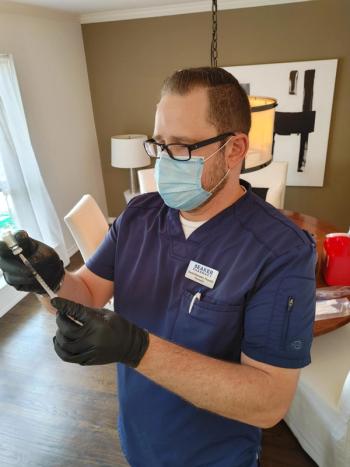
A new service connects community pharmacies with health care systems to support the delivery of health care products and services through crowdsourcing.
A CDC panel voted to add a warning label to the vaccine regarding rare cases of cerebral venous sinus thrombosis.

Individuals who had COVID-19 and recovered had a robust antibody response after the first mRNA vaccine dose, but little immune benefit after the second dose.

The decrease was lower in children under 2 years of age and recovered quickly in that group, but it remained persistent in older children.

Tapping techs as immunizers opens up greater visibility and new source of health care labor.

The researchers’ analysis was based on a large representative sample survey carried out in November to December 2020, which examined a range of factors that previous studies had found to be related to hesitancy about getting vaccinated against COVID-19.

The COVID-19 pandemic has created challenges and opportunities, and this requires agility and flexibility.

There have now been approximately 70,000 pregnant people vaccinated against COVID-19 with no evidence of harm.

Pharmacy Times® interviewed Amy Snyder, a member at Eckert Seamans Cherin & Mellott, on the implications for pharmacy of mandated COVID-19 vaccinations in higher education institutions.

Just as pharmacists have been on the front lines of the COVID-19 pandemic, Kristen Lund, CPhT, a technician at Hy-Vee Pharmacy in Harlan, Iowa, said technicians have taken on greater responsibilities and have become more involved in patient care.

Community pharmacists should consider leaning on their specialty pharmacist peers, where available, as we continue to navigate the new, more virtual normal and attempt to expand these types of services in the future.
According to the researchers, this vaccine was developed using an innovative approach that may eventually open the door to a universal vaccine for coronaviruses, including coronaviruses that previously threatened pandemics or those that cause some cases of the common cold.

The vaccine that could provide protection against existing and future strains of the coronavirus disease 2019 (COVID-19).

Pharmaceutical companies have already begun developing these boosters, and Haydock said he expects to see some variant-specific vaccines available by mid-2021.

Errors related to extended-release opioids and COVID-19 vaccines warrant attention and should be a priority.
Nearly half of independent pharmacists surveyed by the National Community Pharmacists Association are not getting enough or any doses of the COVID-19 vaccine.

As the FDA and CDC have paused use of the Johnson & Johnson COVID-19 vaccine in the United States, research is ongoing to understand whether cerebral venous sinus thrombosis (CVST) is directly linked to the vaccine.
The FDA and CDC said that 6 women experienced cerebral venous thrombosis, an extremely rare disorder associated with blood clotting, 6 to 16 days after the Johnson & Johnson COVID-19 vaccine was administered.

COVID-19 has increased the demand for new, safer curbside conveniences and the health care industry—including the pharmacy—has transformed rapidly to meet patient needs and prioritize safety as a result of the pandemic.
The most common reason given for refusal of a COVID-19 vaccine was distrust of the health care system, correctional or government personnel, and institutions.
Indicators of the COVID-19 pandemic’s impact, including testing rates, positivity ratio, case rates by overall population, and deaths, are clustered by neighborhood, with low-income and predominantly minority communities experiencing worse outcomes.