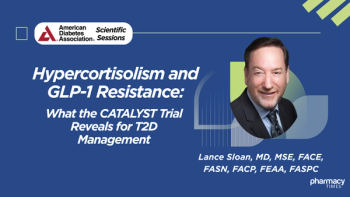
Expert Lance Sloan, MD, discusses CATALYST trial findings on mifepristone, glucagon-like peptide-1 receptor agonist (GLP-1 RA) resistance, and screening for hypercortisolism in uncontrolled type 2 diabetes (T2D).
Expert Lance Sloan, MD, discusses CATALYST trial findings on mifepristone, glucagon-like peptide-1 receptor agonist (GLP-1 RA) resistance, and screening for hypercortisolism in uncontrolled type 2 diabetes (T2D).
Adding semaglutide to existing regimens in older adults with inadequately controlled T2D significantly reduced HbA1c, fasting blood glucose, body weight, and blood pressure.
Targeted diabetes education improved pharmacists' confidence and competence in addressing clinical inertia, with survey data identifying leading causes of delayed treatment intensification in type 2 diabetes.
Jillian Fetzner, MSN, APRN-CNP, described how integrating pharmacists into a collaborative practice agreement processed 3750 diabetes refill requests without provider involvement.
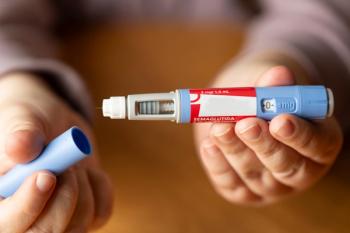
High-dose semaglutide shows improved kidney markers and lowers inflammation in obesity without diabetes, suggesting benefits beyond weight loss.
Vince Sung, PharmD, MBA, BCOP, BCPS, discusses the clinical implications of the updated prostate cancer guidelines.
A panel of clinical pharmacists meets to discuss the complex process of operationalizing cell and gene therapy at an academic medical center.

A pharmacist-led refill authorization program in endocrinology eliminated 3750 refill requests from provider in-baskets in 2025.

PET scans show long COVID mood and brain fog link to limbic activity, not widespread brain inflammation, reshaping COVID-19 treatment targets.

ADA data show CGM plus pharmacist groups helps seniors with type 2 diabetes prevent hypoglycemia, boost confidence, and prompt safer meds.
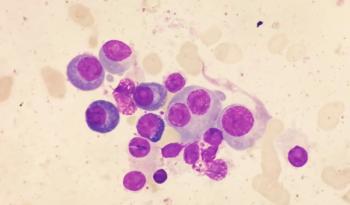
Elranatamab monotherapy produced a 92% overall response rate and a 45% complete response rate in patients with high-risk smoldering multiple myeloma, supporting the potential of BCMA-directed bispecific antibody therapy as an early intervention strategy before progression to active disease.

Cross-trial data from more than 6000 administrations show that a subcutaneous isatuximab on-body injector was highly reliable and well tolerated.

Real-world adoption of talazoparib plus enzalutamide in metastatic castration-resistant prostate cancer highlights ongoing gaps in homologous recombination (HR) biomarker testing across prostate cancer care.

IDEAL trial data show iberdomide quadruplet therapy drives high response rates and rising MRD negativity in newly diagnosed multiple myeloma.

Phase 3 MajesTEC-9 data show that teclistamab monotherapy significantly improved PFS, OS, and depth of response compared with standard PVd or Kd regimens.
Christine Barrett, PharmD, BCOP discusses key updates to the Systemic Treatment of Thyroid Cancer: ASCO Guideline.

The inaugural Joint MAD-ID/SIDP Annual Meeting was a celebration of learning and networking and focused on the educational needs of infectious diseases pharmacist specialists.

Darovasertib plus crizotinib boosts survival signals and response rates in HLA-A2–negative metastatic uveal melanoma, with manageable safety.

SERENA-6 shows early switch to oral SERD camizestrant plus CDK4/6 inhibitor improves PFS2, delays chemotherapy, and preserves quality of life.

The FDA granted Priority Review to the NDA for bezuclastinib plus sunitinib in previously treated advanced gastrointestinal stromal tumors (GIST).

Apnimed has submitted an NDA for AD109 for obstructive sleep apnea following positive phase 3 results from the SynAIRgy and LunAIRo trials.
Real-world evidence is helping improve HER2-low metastatic breast cancer care, identify treatment gaps, and better understand patient distress and outcomes.

A real-world study presented at ASCO 2026 found that early intravenous immunoglobulin administration within 4 weeks of starting talquetamab was associated with significantly lower infection rates and reduced 1-year mortality in patients with relapsed or refractory multiple myeloma.

Updated results from a phase 1 study showed that KLN-1010 produced reduced MRD-negative responses in all treated patients with RRMM.
The FDA approved the oral antiviral ensitrelvir (Xocova; Shionogi & Co, Ltd) for post-exposure prophylaxis (PEP) of COVID‑19 in adults and adolescents 12 years and older.

Data presented at ASCO 2026 show giredestrant plus palbociclib extends PFS in ER+/HER2– metastatic breast cancer; FDA approval on the horizon.

ASCENT-04 updated data show sacituzumab govitecan plus pembrolizumab extends benefit past progression in PD-L1+ metastatic TNBC.
Findings from the SWOG S2001 trial show that pembrolizumab plus olaparib did not significantly improve progression-free survival compared with olaparib alone as maintenance therapy in patients with metastatic pancreatic cancer harboring germline BRCA1/2 mutations.

Pharmacy Times interviews Allison Burns, PharmD, RPh, the CEO of End Mass Overdose (EMO) Health to discuss how medication stigma and bias can impact patient recovery.

Final results from the CEPHEUS trial showed that daratumumab plus VRd produced deeper, more durable responses and prolonged survival.