
The COVID-19 pandemic has revealed structural inequalities in health care and has brought many issues of health equality to the forefront of public consciousness.
The COVID-19 pandemic has revealed structural inequalities in health care and has brought many issues of health equality to the forefront of public consciousness.

In the part 2 of a Pharmacy Times interview with Lucinda Maine, PhD, RPh, CEO of AACP and Lynette Bradley-Baker, PhD, CAE, senior vice president for strategic engagement at AACP, the 2 discussed how pharmacy schools are planning for the upcoming academic year and the future.

As the role of the pharmacist grows, so too does the role of the pharmacy technician.

Pharmacy Times spoke with Lucinda Maine, PhD, RPh, CEO of the American Association of Colleges of Pharmacy (AACP), and Lynette Bradley-Baker, PhD CAE, senior vice president for strategic engagement at AACP.

Pharmacy technicians complete 56% of tasks related to medication history collection and reconciliation, according to Sasser.

At the National Pharmacy Technician Association’s virtual Pharmacy Technician Student Summit, Jamie McGuire, the pharmacy technician program director, discussed the role of professionalism in the lives of pharmacy technician students.

Heldenbrand said many patients look to the internet for answers and increasing numbers of patients are turning to YouTube.

The objective of the study was to examine a large clinical dataset of LGSC through the Ovarian Cancer Association Consortium, with the primary goal of identifying factors that affect survival.

A study presented at the Society of Gynecologic Oncology 2020 Annual Meeting on Women’s Cancer showed menstrual cups may provide a novel, less invasive, and more comfortable approach to the diagnosis of endometrial cancer.

With new and varying options for maintenance therapy in patients with ovarian cancer, patients may express a preference when discussing potential maintenance treatments and their adverse effects.
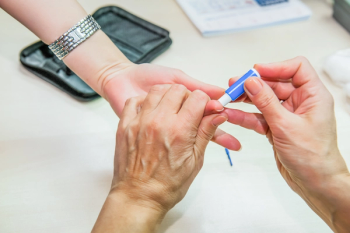
According to a recent study presented at the ADA’s 80th Scientific Sessions, youth and young adults with type 1 diabetes (T1D) in the United States today have worse glycemic control than prior generations.
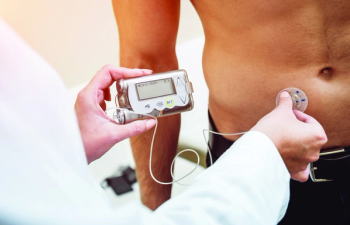
Treatment of recently diagnosed patients with type 1 diabetes (T1D) with anti-IL-21 and liraglutide for 54 weeks was found to be safe and resulted in sustained insulin secretion and lower insulin dose.
The DPPOS is the long-term follow-up of the Diabetes Prevention Program (DPP), a multicenter trial conducted from 1996 to 2001 that established the success of either an intensive lifestyle program or treatment with metformin to prevent or delay the development of T2D in individuals who were considered at high risk for developing the disease.

Oral insulin (OI) slows insulin decline in those at high risk for type 1 diabetes (T1D), according to a poster session at the American Diabetes Association’s 80th virtual Scientific Sessions.
There have not been many evaluations of the prevalence of, and factors associated with, use of DSME/S and support programs in newly diagnosed patients with type 2 diabetes (T2D) in Louisiana, according to the study authors.
The slowed metabolic decline among the OI trial participants at highest risk was assessed and defined by the DPT1 Risk Scores over a 6.75 threshold.

The TEDDY study also aims to identify environmental triggers that cause the immune destruction of beta cells.

The results of the study demonstrated that dapagliflozin was able to reduce new-onset diabetes by 32%.

The results of the real-world, observational study were presented by Eli Lilly during the American Diabetes Association's 80th Virtual Scientific Sessions.

Dapagliflozin is typically used as a second line GLM in T2D and often added to metformin.

A study of more than 9000 people finds overall need for better access to psychological and other non-medical diabetes care for people living with diabetes and their caregivers.

Managing diabetes in rural areas is difficult due to limited access to specialty care and self-management programs.

Ripretinib is a kinase inhibitor indicated for adults with advanced GIST, approved by the FDA in May 2020.
Apalutamide in combination with ADT prolonged median OS by 14 months and decreased the risk of death by 22%. Further, median OS was significantly longer, with 73.9 months for patients receiving treatment with apalutamide in combination with ADT compared with 59.9 months for patients receiving placebo in combination with ADT.

The recent analysis of VB-111 was a phase 3 potential registration study conducted with 400 patients and 95 sites around the world.

“Providing quality of care in a field of cancer risk, genetics, and prevention revolves around 3 essential interdependent components,” said presenter Erin Wysong Hofstatter, MD.

At the 2020 ASCO Annual Meeting, speaker Leslie R. Ellis, MD, MSHPEd, FACP, discussed the results of studies in a session looking into current research on leukemia, MDS, and allotransplant.

Results of the COVID-19 and Cancer Consortium cohort study were presented during the virtual science program of the 2020 American Society of Clinical Oncology (ASCO) Annual Meeting.

A study found that nurse-led follow-up and mobile health app leads to improved relative dose intensity, patient experiences, hospitalizations and their duration, and the rate of treatment-related grade 3 or higher toxicities.

The presence of ongoing SHM or CSR in the context of CLL may support the functionality of DNA damage repair pathways, with potential relevance to therapeutic strategies.