

Data indicates fedratinib’s role as an effective second-line treatment in patients with myelofibrosis who have been previously treated with a JAK inhibitor, such as ruxolitinib, though more research is necessary.
Data indicates fedratinib’s role as an effective second-line treatment in patients with myelofibrosis who have been previously treated with a JAK inhibitor, such as ruxolitinib, though more research is necessary.

MB-105 is a first-in-class CD5-targeted chimeric antigen receptor (CAR) T-cell therapy for the treatment of relapsed or refractory CD5-positive T-cell lymphoma.

Isatuximab is a CD38-targeting monoclonal antibody that has demonstrated significant clinical success in improving minimal residual disease rates and progression-free survival.

In 2025, medically integrated dispensing pharmacies face significant challenges, including low reimbursements, restrictive pharmacy benefit manager practices, complex therapies, regulatory barriers such as the Stark delivery law, and the Inflation Reduction Act's financial implications, necessitating urgent advocacy, reform, and collaboration to sustain equitable, patient-centered cancer care.
Preliminary phase 1 trial results demonstrate that patients with small cell lung cancer generated early clinical activity after being administered ZL-1310.
Endocrine therapy in combination with CDK4/6 inhibitors improves patients’ outcomes, but many still become treatment resistant.
The trial meets one of the study’s dual primary endpoints of progression-free survival, but did not meet its other primary endpoint of overall survival.
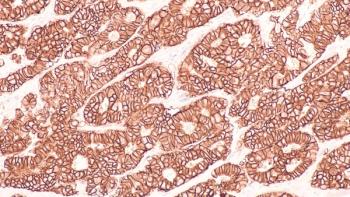
The antibody-drug conjugate shows efficacy in reducing disease progression risk and increasing progression-free survival in patients with HR+, HER2-low, or HER2-ultralow metastatic breast cancer.

Axatilimab-csfr is a colony-stimulating factor-1 receptor (CSFR1) blocking monoclonal antibody indicated for cGVHD after 2 or more lines of prior therapy in adults and pediatric patients that weigh at least 40 kg.

Patients with myelofibrosis have a higher likelihood of having a cardiovascular risk factor when compared with essential thrombocythemia or polycythemia vera.

Boosting ursodeoxycholic acid (UDCA) levels through dietary supplementation was shown to control tumor growth in mice with liver cancer.

Managing bispecific antibodies requires collaboration and meticulous protocols.

Tucatinib is an oral HER2-targeting tyrosine kinase inhibitor that was approved by the FDA in 2020.

Presence of comorbidities in older patients with breast cancer complicates treatment decisions.
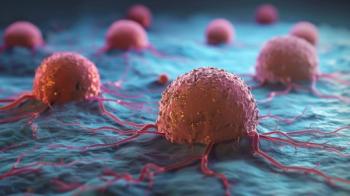
Rates of invasive breast cancer or death were 50% lower with adjuvant trastuzumab emtansine compared with trastuzumab alone.
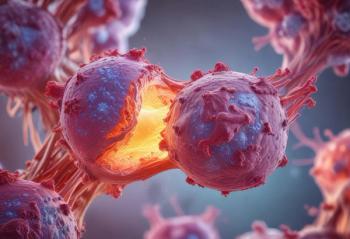
Endocrine-immune-based therapies yielded favorable objective response rates but had limited impact on pathological complete response.

These data suggest the potential efficacy of immune checkpoint inhibitors with anthracycline-based chemotherapy.

The FDA is modernizing its approach to drug development and optimization.

Memantine/donepezil and everolimus are used to treat dementia of the Alzheimer type and tuberous sclerosis complex-associated subependymal giant cell astrocytoma, respectively.

Stem cell transplantation rates increased the longer patients remained on therapy for myelofibrosis.
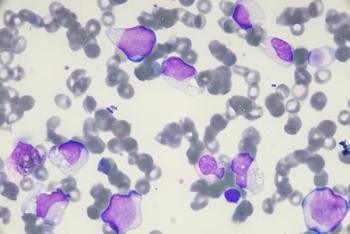
The FDA approved treosulfan, in combination with fludarabine, for patients 1 year of age and older with acute myeloid leukemia (AML) or myelodysplastic syndrome (MDS).

Vusolimogene oderparepvec in combination with nivolumab is being assessed to treat individuals with unresectable or metastatic stage IIIb-IV cutaneous melanoma.

A panel of experts discuss treatment of HR+, HER2– breast cancer with therapies such as ribociclib, alpelisib, everolimus, and elacestrant.

Black and Native American patients were about 2 to 3 times more likely to die of cancer compared with White patients, and women younger than 50 years were affected more than male patients.
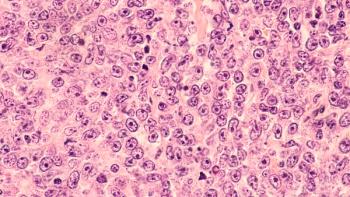
A phase 2 trial investigates MRD detection and therapy advancements.

At the start of 2025, 590 drug prices changed, with only 7 drugs seeing decreases in wholesale acquisition costs (WAC).

KN026 is a humanized bispecific antibody that targets and binds to HER2 proteins on the surface of cancer cells.
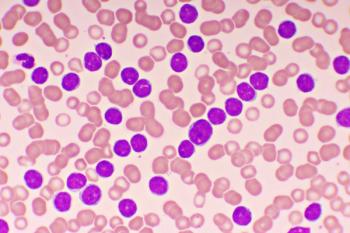
Investigators assessed fixed-duration venetoclax plus acalabrutinib with or without obinutuzumab vs chemoimmunotherapy.

The closure of Baxter’s North Cove facility has significantly impacted existing IV fluid shortages into 2025.

Experts presented results that may transform treatment and clinical practice strategies.