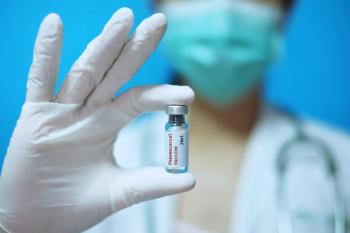
VAX-31 met all primary immunogenicity end points against PCV20 and PCV21 in the pivotal OPUS-1 trial.
RSV hospitalization raised short-term invasive pneumococcal disease risk, especially among unvaccinated individuals.
Hospitalization for respiratory syncytial virus (RSV) was associated with a significantly increased short-term risk of invasive pneumococcal disease (IPD) among commercially insured individuals aged 0 to 64 years, according to research presented at IDWeek 2026. Individuals without documented pneumococcal vaccination appeared to carry the greatest risk, a finding the investigators said supports vaccination as a strategy to reduce secondary bacterial complications after RSV.1
Although the link between influenza and IPD is well established, the timing and strength of the relationship between RSV and IPD have remained underexplored. Evidence suggests that RSV damages the respiratory tract and impairs immunity, which may leave individuals more susceptible to Streptococcus pneumoniae.1
Investigators from the University of Florida and the University of British Columbia conducted a retrospective analysis of the Merative MarketScan Commercial Claims Database from 2016 to 2023. Of 60,721 hospitalized RSV cases, 44,785 were eligible after the investigators excluded individuals aged 65 years or older and those without 90 days of continuous enrollment before the index date. IPD was defined as pneumococcal meningitis, bacteremia, or septicemia.1
In the self-controlled case series (SCCS), the investigators compared IPD incidence during risk windows of days 1 to 7, 1 to 14, and 1 to 30 after RSV hospitalization with a control period within the same individual. In the matched cohort analysis, they compared RSV hospitalizations with influenza hospitalizations after excluding coinfections and individuals with IPD in the 30 days before the index date. Patients were matched 1:1 on age, sex, and calendar year, and Cox proportional hazards models adjusted for Charlson Comorbidity Index scores were used to estimate IPD risk within 7, 14, 30, and 90 days.1
The SCCS included 489 patients who developed IPD after RSV hospitalization. Their mean age was 21.3 years, 42.2% were younger than 2 years, and only 15.1% had documented pneumococcal vaccination.1
RSV hospitalization was associated with a significantly increased incidence of IPD across all 3 risk windows, with the strongest association in the first week:1
In subgroup analyses of the 14-day window, risk was significantly elevated among individuals younger than 1 year (IRR, 2.53; 95% CI, 1.11-5.76), those aged 3 to 17 years (IRR, 3.24; 95% CI, 1.45-7.28), and those aged 18 to 49 years (IRR, 2.16; 95% CI, 1.03-4.56). Individuals without pneumococcal vaccination had a significantly increased risk (IRR, 1.82; 95% CI, 1.22-2.73), whereas the association among vaccinated individuals was not statistically significant (IRR, 1.49; 95% CI, 0.43-5.18).1
The matched cohort included 24,854 patients, with 12,427 in each group, and baseline characteristics were generally well balanced. Within 90 days, IPD occurred in 56 patients (0.45%) hospitalized with RSV, compared with 30 patients (0.24%) hospitalized with influenza.1
RSV was associated with a consistently elevated IPD risk compared with influenza across all follow-up windows. The strongest association was observed at 90 days, when the crude hazard ratio (HR) was 1.75 (95% CI, 1.12-2.73). After adjustment for comorbidities, the HR was 1.54 (95% CI, 0.98-2.42; P = .06), which did not reach statistical significance. Subgroup analysis within 30 days suggested elevated risk among adults aged 18 to 49 years (crude HR, 5.41; 95% CI, 1.20-24.4), although event counts were small.1
The findings align with laboratory evidence of synergy between the 2 pathogens. In an infant mouse model, coinfection with a murine analogue of RSV increased nasal tissue damage and raised pneumococcal density and shedding in the nasopharynx. Clinically, detection of both pathogens in young children with acute respiratory infection has been associated with more severe disease, and the introduction of pneumococcal conjugate vaccines (PCVs) has been associated with declines in pediatric RSV hospitalizations.2
Pharmacists are well positioned to act on both sides of this relationship. In October 2024, the CDC's Advisory Committee on Immunization Practices (ACIP) expanded its recommendation to a single PCV dose for all PCV-naive adults aged 50 years or older, citing the substantial burden of IPD in adults aged 50 to 64 years. In 2025, ACIP also recommended a single dose of RSV vaccine for adults aged 50 to 59 years at increased risk of severe RSV disease. Reviewing pneumococcal vaccination status when administering RSV vaccines, and vice versa, may help close gaps among individuals at greatest risk.3,4
The study relied on commercial claims data, excluded individuals aged 65 years or older, and several subgroup analyses involved small event counts. Still, the investigators concluded that the study provides real-world evidence supporting pneumococcal vaccination to reduce secondary bacterial complications following RSV hospitalization.1