

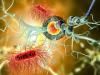

























Protein regulator may lead to new multiple sclerosis treatments.
Protein regulator may lead to new multiple sclerosis treatments.

High doses of biotin show promise in progressive multiple sclerosis.

Research seeks to determine the genetic and environmental risk factors that trigger MS.

Gut microbiota poses a curious question in MS development and research.

Researchers explore possible reasons why HIV-positive patients have a decreased risk of MS.

Most MS patients have not considered changing their diet as a therapeutic approach.

Research compares different methods to control the symptoms of MS.

Phase 2 trial shows reduction in the cumulative total number of gadolinium-enhancing lesions in MS patients.

Ocrevus causes a significant reduction in disability progression in primary progressive multiple sclerosis.

Ocrevus targets a key contributor to myelin and axonal damage in primary progressive multiple sclerosis without harming other immune functions.

Scarring on the brain from MS can impact the ability to identify certain flavors.

MS is difficult to diagnose because progression of the disease occurs at different rates.

Multiple sclerosis is a chronic autoimmune, inflammatory neurologic disease of the central nervous system that affects more than 400,000 individuals in the United States and 2.5 million individuals worldwide.

Nanoparticles found to stop disease progression in a model of chronic MS.

Natalizumab linked to increased risk biomarkers for virus that can lead to potentially fatal condition.

Targeting enzyme found to slow progression of MS in human cells.
Findings may lead to new treatment that protects nerves from damage caused in optic neuritis and throughout the central nervous system during MS attacks.

Serum antibody repertoires may serve as biomarkers for the pathology and progression of multiple sclerosis.

Few MS patients are treated for depression through psychotherapy or pharmaceutical therapy.

Iron accumulation may precede more pronounced brain atrophy.

Evidence shows demyelination and neuroaxonal abnormalities occur in both the white and grey matter of MS patients.

A joint scientific statement appears to be formulating the building blocks to amend the guidelines for alteplase.

Estrogen found to reduce the ability of the immune system to attack the brain in MS patients.

Acceptance is a multiple sclerosis treatment goal because it is associated with better drug adherence.

Study finds presence of additional environmental risk factors affect the etiology of multiple sclerosis.