

























Palbociclib is indicated for adults in combination with an aromatase inhibitor as initial endocrine-based therapy in postmenopausal women or in men.

Palbociclib is indicated for adults in combination with an aromatase inhibitor as initial endocrine-based therapy in postmenopausal women or in men.

The drug combination achieved a median overall survival of more than 5 1/2 years in the first-line setting for postmenopausal women with HR+/HER2- aBC1, the company says.

Trastuzumab deruxtecan (Enhertu) approved for adult patients with unresectable or metastatic HER2-positive breast cancer who were previously administered an anti–HER2-based regimen.

Up to 50% of all patients with breast cancer have tumors with a HER2 immunohistochemistry level not currently eligible for HER2-targeted therapy.

New therapies and combination regimens may allow a more tailored approach.
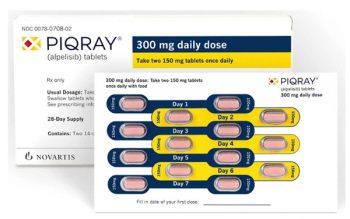
Piqray is indicated in combination with fulvestrant for the treatment of postmenopausal women, and men, with HR-positive/HER2-negative, PIK3CA-mutated, advanced or metastatic breast cancer, as detected by an FDA-approved test following progression on or after an endocrine-based regimen.

Abemaciclib (Verzenio; Lilly) is the first addition to adjuvant endocrine therapy approved by the FDA in two decades.
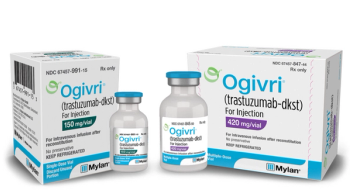
Trastuzumab (Herceptin, Herzuma, Kanjinti, Ogivri, Ontruzant) is a HER2/neu receptor antagonist indicated for early and advanced breast cancer, advanced stomach cancer, and gastroesophageal junction cancer.

BRACAnalysis CDx assay is indicated for use as a companion diagnostic to select patients with germline BRCA-mutated, HER2-negative, high-risk early breast cancer who may derive clinical benefit from olaparib.
Olaparib (Lynparza) approved for patients with germline BRCA-mutated, HER2-negative, high-risk early breast cancer.

Phase 3 TROPiCS-02 study continues to follow patients for overall survival, a key secondary endpoint.

Trastuzumab deruxtecan demonstrated clinically meaningful and statistically significant improvements in overall and progression-free survival, the company says.
Olaparib is a first-in-class PARP inhibitor and is the first targeted treatment to block DNA damage response in cells or tumors with a deficiency in homologous recombination repair.

Pyrotinib combined with capecitabine found to improve overall survival in patients with previously treated HER2-positive metastatic breast cancer.

Pertuzumab is indicated for use in combination with trastuzumab and docetaxel for treatment of patients with HER2-positive metastatic breast cancer who have not received prior anti-HER2 therapy or chemotherapy for metastatic disease.
Abemaciclib (Verzenio) approved in combination with endocrine therapy for the adjuvant treatment of adult patients with HR–positive, HER2-negative, node-positive, early breast cancer at high risk of recurrence.

Patients with triple-negative breast cancer who received sacituzumab govitecan had a median progression-free survival of 4.6 months compared to 2.3 months with chemotherapy.

Nearly 94.1% of individuals treated with the drug in the DESTINY-Breast03 study were still alive at the 1-year mark, according to a statement from AstraZeneca.
Tucatinib is indicated to treat adults with advanced unresectable or metastatic human epidermal growth factor receptor 2 (HER2)-positive breast cancer who have already received at least 1 anti-HER2-based regimen in the metastatic setting.
Ado-trastuzumab (Kadcyla, Genentech) was approved by the FDA in 2019 for the adjuvant treatment of patients with human epidermal growth factor receptor 2-positive early breast cancer.

Approved by the FDA on June 29, 2020, the pertuzumab, trastuzumab, and hyaluronidase-zzxf combination therapy with chemotherapy offers several advantages to the standard treatment of pertuzumab plus trastuzumab with chemotherapy for breast cancers with HER2 overexpression.

The Independent Data Monitoring Committee concluded that DESTINY-Breast03 met the primary endpoint of progression-free survival and showed a highly statistically significant and clinically meaningful improvement for patients with human epidermal growth factor receptor 2 (HER2)-positive, unresectable and/or metastatic breast cancer previously treated with trastuzumab and a taxane.

Ribociclib was found to prolong overall survival and improve post-progression outcomes in patients with HR-positive/HER2−negative advanced breast cancer, particularly among younger patients with a significant unmet need.

The trial, in phase 3, is the first to report data comparing a neoadjuvant anti-HER2 based regimen with or without the anti-PD-L1 antibody, atezolimumab, in patients with high-risk, HER2-positive early breast cancer.
Margetuximab, trastuzumab deruxtecan, and tucatinib have all been approved in the past 2 years for the treatment of various subsets of patients with breast cancer.