
























Beyond working in traditional retail, community, and health-system settings, pharmacy students have a lot of options. Two Roosevelt University pharmacy students are proof of that.
Beyond working in traditional retail, community, and health-system settings, pharmacy students have a lot of options. Two Roosevelt University pharmacy students are proof of that.
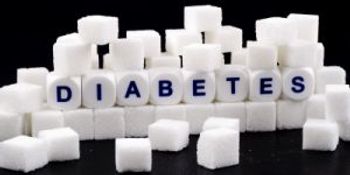
Sanofi has announced the FDA approval of its insulin glargine injection (Toujeo), a once-daily long-acting basal insulin, for the improvement of glycemic control in adults with type 1 and type 2 diabetes.

Novo Nordisk has positive results from a completed phase 2 trial on the oral formulation of its investigational, long-acting human glucagon-like peptide-1 analogue.

Many patients with non-alcoholic fatty liver disease also have low vitamin D levels.

Diabetics who took metformin saw a decreased chance of developing adenocarcinoma.

Several studies have reported that controlling blood pressure with medication improves cardiovascular outcomes.

College freshmen face tremendous pressure, often trying to adjust to tough academic standards while living away from home for the first time. The stress of freshman year can be multiplied when the student is managing a chronic disease such as type 1 diabetes.
Karolinska Institutet and Novo Nordisk today signed a collaboration agreement in the field of diabetes. The programme will be fully funded by Novo Nordisk.
Although the American Diabetes Association recommends that adult patients with diagnosed diabetes visit a health care professional biannually to achieve and maintain glycemic control, a recent report from the National Center for Health Statistics in the US Centers for Disease Control and Prevention shows that 1 in 5 younger diabetics have not done so in the past 6 months.

The FDA today expanded the indication of Roche's ranibizumab (Lucentis), approving the drug for the treatment of diabetic retinopathy in patients with diabetic macular edema.
The American Pharmacists Association is pleased to announce that the association's education team and The Pharmacist & Patient-Centered Diabetes Care Certificate Training Program were honored with the 2015 Award for Outstanding Live CE Activity by the Alliance for Continuing Education in the Health Professions.

Sanofi and MannKind Corp. have announced the US launch of their Afrezza Inhalation Powder, the first and only insulin approved for administration via inhalation.
Limiting added sugars could be among the most effective strategies for reducing the prevalence of type 2 diabetes.
The FDA today approved Boehringer Ingelheim and Lilly's empagliflozin and linagliptin (Glyxambi) as an adjunct to diet and exercise to improve glycemic control in adults with type 2 diabetes.

Women diagnosed with polycystic ovary syndrome are more likely to develop heart disease, diabetes, and other chronic conditions than those without the hormone disorder.
Drinking more than two alcoholic beverages daily in middle-age may raise your stroke risk more than traditional factors such as high blood pressure and diabetes.
Not every patient requires an aspirin a day.
The FDA announced today that it will permit the marketing of a mobile medical app that will help patients with diabetes share data from a continuous glucose monitor with other individuals.
The introduction of sodium glucose transporter 2 inhibitors has marked a turning point in the management of patients with both type 1 and type 2 diabetes.

Although metformin is a proven first-line diabetes medication, many patients with type 2 diabetes (T2D) are discouraged from taking the drug due to inappropriate FDA labeling.

The FDA today approved a device that is intended to help certain obese adults lose weight.

A new study published January 7, 2015, in the Journal of Nutrition found that magnesium levels, genes, and race affect a woman's likelihood of developing type 2 diabetes.
The Pharmacy Quality Alliance (PQA) has retired a performance measure on treating hypertension in patients with diabetes that is no longer in accordance with the Joint National Committee's (JNC8) 2014 hypertension guidelines.
Civilian women with posttraumatic stress disorder have a considerably increased risk of developing type 2 diabetes compared with counterparts unexposed to trauma.