
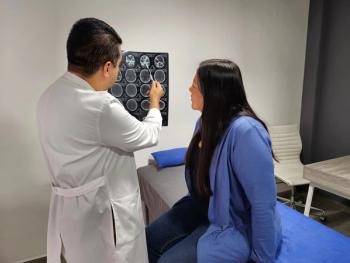
Huntington disease (HD) has no curative treatments, therefore, there is a great need for therapies that can reduce or slow the progression of symptoms.
Huntington disease (HD) has no curative treatments, therefore, there is a great need for therapies that can reduce or slow the progression of symptoms.

Nilufer Ertekin-Taner contrasts current one-size-fits-all Alzheimer disease treatments with the promise of precision medicine and emphasizes the vital role of collaborative, multidisciplinary care.

The HERCULES trial demonstrates tolebrutinib's potential to slow disability progression in non-relapsing secondary progressive multiple sclerosis, offering a new treatment option for patients with limited therapeutic choices.

Pharmacy professionals gathered at the American Pharmacists Association 2025 Annual Meeting and Exposition and discussed critical insights in interviews with Pharmacy Times®.
Kayla Johnson, PharmD, BCPS, BCPP, highlights how integrating pharmacists into neurology clinics drives significant cost savings, high intervention acceptance rates, and improved care coordination.
Stephanie Miller, PhD discusses how artificial intelligence can revolutionize medical research by assisting in drug development and potentially providing more targeted treatments across various diseases.
Andrew Charles, MD, outlines why calcitonin-gene-related peptide (CGRP) antagonists are increasingly favored as first-line migraine treatments and how pharmacists play a key role in patient education and support.

A study led by Kayla Johnson, PharmD, BCPS, BCPP found that integrating specialty pharmacists into non-multiple sclerosis (MS) neurology clinics led to significantly enhanced patient care and treatment outcomes.
Nilufer Ertekin-Taner outlines how embracing the biological complexity of neurodegenerative diseases can guide the development of precision therapies akin to those used in oncology.

Compared with the original dose regimen, an antithrombin-based dose regimen of fitusiran was associated with an improved safety profile.

This action makes inebilizumab the first and only FDA-approved treatment for adults with immunoglobulin G4-related disease (IgG4-RD).

Through increased utilization of multi-omic data, health care professionals can revolutionize the treatment paradigm of countless diseases.

The registry data showed that cardiac magnetic resonance (CMR) was obtained in more clinically complex patients with recurrent pericarditis.

Given rituximab’s tendency to cause infections in patients being treated for autoimmune diseases, the addition of intravenous immunoglobulin works to reduce that risk and induce clinical improvements.

Schizophrenia is a chronic mental illness that significantly affects patients through its symptoms, associated health conditions, and treatment challenges, with long-acting injectable antipsychotics offering potential benefits in improving adherence and reducing relapses.

Effective management of immune checkpoint inhibitor-related toxicities requires early intervention, evolving guideline adherence, and multidisciplinary collaboration, with steroids remaining a key treatment.

The risk of developing HZ in this population is 10 to 30 times higher than in the general population.

Currently, BEAM-302 is undergoing a phase 1/2 clinical trial to evaluate its efficacy in patients with alpha-1 antitrypsin deficiency (AATD) who have lung disease and liver disease.

Approval of fitusiran, a small interfering RNA drug, was found effective in patients with hemophilia regardless of inhibitor status.

In certain patients with chronic kidney disease (CKD), peritoneal dialysis maintained hemodynamic stability, optimal nutritional status, reduced hospitalization, and lowered diuretics reliance.

The approval fills a treatment gap for patients with this rare disease, which can severely diminish quality of life.

As the COVID-19 pandemic moves into an endemic phase, the major impacts on drug research, collaboration, and use of new technologies due to the spread of the virus warrant recognition.

Pharmacists can promote prevention through the implementation of antimicrobial stewardship initiatives and advocate for fecal microbiota transplant.

The innovative neonatal cardiac progenitor cell therapy is designed to repair heart tissue in patients with heart failure with preserved ejection fraction (HFpEF).

Specialty distribution models, including limited drug distribution systems, ensure safe medication access but can create barriers for patients, making medically integrated pharmacies essential in coordinating care.
The study aims to address lingering public concerns, but its findings and communication have the potential to impact vaccine confidence and public health efforts.

The new indication for guselkumab in Crohn disease builds off a previous approval in ulcerative colitis, providing patients a treatment option for the major forms of inflammatory bowel disease.

The agent is the only approved therapy designed to address the underlying mechanisms of the disease.

Exidavnemab is a novel monoclonal antibody with disease-modifying potential.

Results highlight promising advancements in novel treatments for patients with HIV-1, including a combination regimen with broadly neutralizing antibodies and long-term data on bictegravir, emtricitabine, and tenofovir alafenamide (Biktarvy).