
The vice president of pharmacy operations at American Oncology Network discusses the 340B Drug Pricing Program and its growth and impact on community oncology.
The vice president of pharmacy operations at American Oncology Network discusses the 340B Drug Pricing Program and its growth and impact on community oncology.
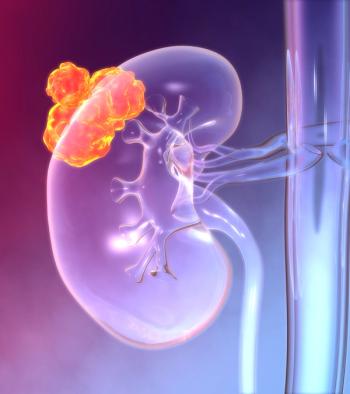
Viktor Grunwald, MD, PhD, discusses the post-hoc analysis of the phase 3 CLEAR trial investigating the combination treatment in the first-line setting for advanced renal cell carcinoma.

Compared to chemotherapy alone, amivantamab plus chemotherapy treatment with and without lazertinib had also demonstrated positive trends in OS and ORR in patients with NSCLC.
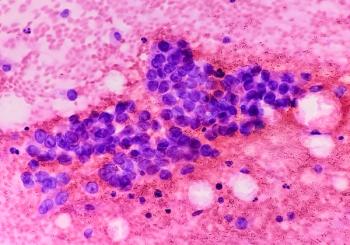
Compared to osimertinib alone, first-line treatment with amivantamab plus lazertinib was also shown to improve progression-free survival and have an increased duration of response.

Patients with previously untreated HLA-A*02:01+ mUM saw improvements in OS, PFS, and ctDNA clearance.

Compared to placebo plus chemotherapy, nivolumab plus chemotherapy had also improved event-free survival and both pathological complete response and major pathologic response rates.

Vanderbilt Specialty Pharmacy and Takeda Oncology are reaching across silos and entering an innovative partnership to improve patient care across the entire medication journey.

According to investigators, additional research is necessary to further understand how lutetium impacts overall survival in patients with metastatic prostate cancer.

The trial data showed ongoing clinical benefit in patients with advanced endometrial cancer who completed pembrolizumab and continued on lenvatinib vs chemotherapy alone.

Compared to chemotherapy alone, amivantamab plus chemotherapy had a better objective response rate and prolonged progression-free survival and overall survival.

This is the first phase 3 trial to evaluate a KRAS G12C-inhibitor plus an anti-epidermal growth factor receptor antibody for this type of colorectal cancer.

The novel combination met the co-primary endpoints of progression-free survival and overall survival during the CheckMate -901 trial, also demonstrating sizeable improvement in objective response.

Oncology leaders and pharma representatives discuss collaboration best practices.

Not only did taletrectinib shrink tumors in 92% of patients who were tyrosine kinase inhibitor -naïve, but 89.5% of patients continued to respond to treatment at 12 months.

Compared to endocrine therapy alone, the combination of ribociclib and endocrine therapy lowered the risk of cancer recurrence in patients with early breast cancer by 25.2%.

Saira A. Jan, MS, PharmD, discussed a novel pilot program in New Jersey aiming to expand home infusion services in oncology.


The fast pace of information can make it difficult to efficiently apply data to care.

Subcutaneous nivolumab had demonstrated noninferiority of Cavgd28, Cminss, and ORR compared to the intravenous form of treatment.

The statistically significant and clinically meaningful improvement in disease-free survival is “practice-changing” and may represent a “paradigm shift” in treatment, according to experts.

Timothy O’Shea, MS, PharmD, discussed the growth of home infusion programs and how they benefit patients.
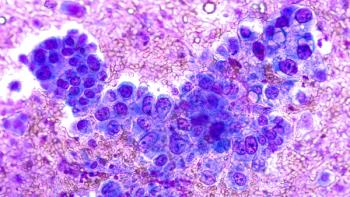
Integrating immunotherapies will continue to improve patient outcomes and quality of life.

This finding underlines the need for methods that address multiple genomic alterations and targeted therapies effective in tumors driven by variations in suppressor genes or transcription factors.

A panel hosted by HOPA, ACCC, and AVAHO discusses strategies to ensure patient access to treatment.

This patient population has had low survival rates with available treatments.

PLCOm2012 uses additional parameters to predict the risk of lung cancer and was found more effective when identifying both Indigenous and non-Indigenous individuals with lung cancer.
The updated version of the Oncology Care Model (OCM) incentivizes value-based care over volume, but some wonder if it is enough.

Kimberly Westrich, MA, discussed value assessment tools and how they can help make key decisions in health care spending.
Pembrolizumab (Keytruda) gains its sixth approval in non–small cell lung cancer (NSCLC), with the latest indication in combination with platinum-containing chemotherapy as neoadjuvant treatment, and then continued as a monotherapy for the post-surgical adjuvant treatment of patients with resectable NSCLC.

Mental health treatment may be necessary when SAEs occur.