
Research may minimize operations for benign disease while maintaining a low morbidity and mortality for surgical resection.
Research may minimize operations for benign disease while maintaining a low morbidity and mortality for surgical resection.

Researchers seek to improve diagnosis, support genetic counseling, and enhance medical management.

Treatment doubles overall survival of patients with recurrent glioblastoma.

Process makes tumors more sensitive to chemotherapy to improve targeted therapy.
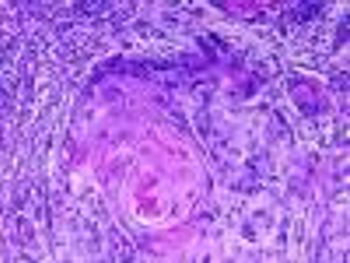
Top news of the week in cancer drug development.

Exercise following diagnosis may offer significant protection among cancer survivors.

App could improve cancer diagnostics in low- to middle-income and remote areas.

Study determines which genetic mutations in cancer will be most likely to respond to chemotherapy.

High-dose chemotherapy and autologous stem cell transplantation show promise for patients with light-chain amyloidosis.

Many colon cancer disparities found in patients of different races under 50-years old.

Carcinoid syndrome frequently prevents patients from leading active lives.

Dinaciclib may be able to eliminate metastases without shrinking the primary tumor.

Targeted drug delivery focuses on diseased cells to minimize side effects on normal cells.

Significant decrease found in oral and intestinal microbial diversity during chemotherapy.

Opportunistic infections accounted for nearly one-fourth of all readmissions.

Families of children with cancer face food, housing, and energy insecurity.

Inhibiting growth receptor presents promising treatment option.

BRD4 gene could be exploited in treatment of acute myeloid leukemia.
Exposure to benzene due to high traffic volume during childhood may contribute to disease development.
Top news of the week in cancer drug development.
Opdivo was previously approved for patients with squamous NSCLC whose disease progressed during or after platinum-based chemotherapy.

Several genetic characteristics of more aggressive tumors significantly more prevalent in the African American community.
Roflumilast normally treats inflammatory lung diseases, but was found to dramatically inhibit tumor growth.

Contaminated dairy and beef with bovine leukemia virus may contribute to cancer development.

Health information sharing web site helps connect patients among more than 2500 conditions.

Study findings may change the development of cancer therapy.

FOXC1 gene is needed to turn cells into specialized tissues such as the eyes, kidney, brain, and bone.

While I'm far from being an expert in oncology, I strongly feel that anticancer treatments should be affordable.

Shortened telomere length may help inhibit cancer, but it is also associated with the progression of aging in humans.

Inhibiting the protein PARP 14 shows promise in stopping uncontrolled cancer cell growth.