


















Brentuximab vedotin with nivolumab and standard chemotherapy agents produced a nearly 100% overall response rate in patents with early-stage classical Hodgkin lymphoma.
Brentuximab vedotin with nivolumab and standard chemotherapy agents produced a nearly 100% overall response rate in patents with early-stage classical Hodgkin lymphoma.
Golidocitinib (DZD4205) is the first Janus kinase 1 inhibitor to be used for this aggressive and rare form of non-Hodgkin lymphoma.
Asking patients to “give us a month of [their] life” for autologous chimeric antigen receptor therapy may reduce relapse or recurrence for 4 years or more, according to expert.
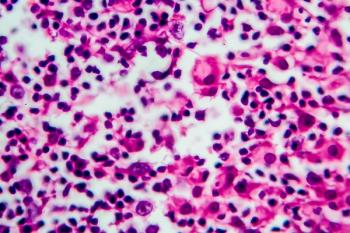
The phase 3 S1826 trial is the largest Hodgkin lymphoma study in NCTN history.
Obe-cel is an investigational CD19 CAR T-cell therapy currently in clinical trials for relapsed/refractory B-cell acute lymphoblastic leukemia and B-cell non-Hodgkin lymphoma.
Treatment with epcoritamab-bysp showed a 61% overall response rate and a 38% complete response rate in heavily pretreated patients with R/R DLBCL.
The therapy had a clinically meaningful response in patients with relapsed or refractory (R/R) follicular lymphoma and R/R mantle cell lymphoma.
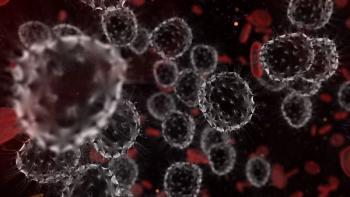
In a phase 3 trial, the risk of disease progression, relapse, or death was reduced by 27% with polatuzumab vedotin-piiq plus R-CHP compared with R-CHOP in adults with previously untreated diffuse large B-cell lymphoma or high-grade B-cell lymphoma.
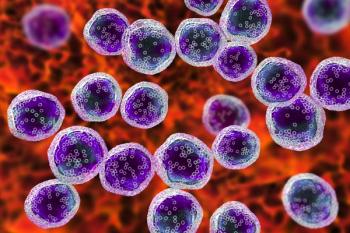
Mosunetuzumab-axgb may be better tolerated by older adults with relapsed or refractory follicular lymphoma and patients with poor performance status.
According to 5-year follow-up data, the combination of tafasitamab-cxix and lenalidomide produced a durable response in patients with diffuse large B-cell lymphoma.
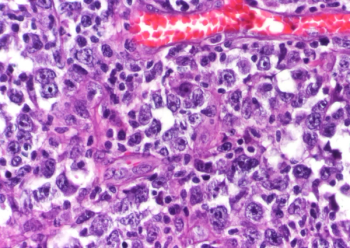
Accelerated approvals for ibrutinib (Imbruvica) for patients with mantle cell lymphoma and with marginal zone lymphoma voluntarily withdrawn based on data that were insufficient to support conversion to full approval.
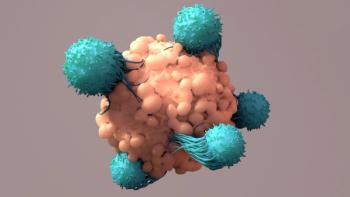
Expert notes significant advances in the treatment of multiple myeloma, large B cell lymphomas, and acute myeloid leukemia, during a presentation at HOPA 2023 Annual Conference.
Axicabtagene ciloleucel demonstrated a 2.5-fold increase in individuals with relapsed/refractory large B-cell lymphoma who were alive at 2 years and did not experience either cancer progression or require the need for additional cancer treatment.
Since 2014, 10 immunotherapies have been approved by the FDA, including 6 CAR T-cell therapies and 4 BiTE therapies.
At 1 year, patients receiving chemotherapy regimens containing anthracyclines for lymphoma who took statins had an average ejection fraction that was 1.3% higher than those who took placebo.
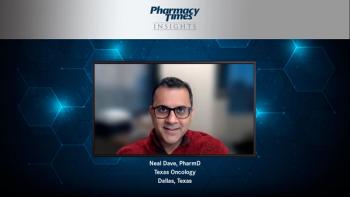
Experts discuss novel agents being evaluated for use as third-line treatment options and provide their closing thoughts on this discussion.
Brandon Dyson, PharmD, BCOP, BCPS, explores considerations when selecting the next line of treatment, and the efficacy of omacetaxine and ponatinib as third-line therapy options.
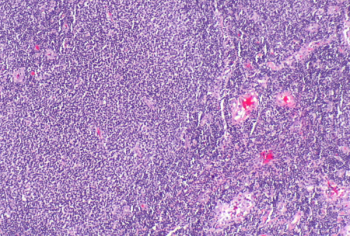
On April 2, 2023, the FDA will announce the approval status of Roche’s supplemental Biologics License Application for polatuzumab in the treatment of diffuse large B-cell lymphoma.
CRISPR technology has also been successful in treating a pediatric patient with T-cell acute lymphoblastic leukemia, showing feasibility of its use for cancer immunotherapy.
Neal Dave, PharmD, reviews the therapeutic options considered for patients with a T315I mutation identified during mutational analysis.
Brandon Dyson, PharmD, BCOP, BCPS, reviews the challenges in treatment of resistant chronic myeloid leukemia and Philadelphia chromosome-positive ALL.
At 36 months, the overall survival rate of patients with relapsed/refractory B-cell acute lymphoblastic leukemia administered brexucabtagene autoleucel was 47.1%, with a median overall survival of 26 months.

The approach was based on previous research suggesting that foods rich in carotenoids, lycopene, certain B vitamins, and omega 3 fatty acids improved fatigue in survivors of breast cancer.
Brandon Dyson, PharmD, BCOP, BCPS, provides an overview of how tyrosine kinase inhibitor resistance is identified in patients with chronic myeloid leukemia and Philadelphia chromosome-positive ALL.
Experts review how the rates of tyrosine kinase inhibitor resistance affect treatment options for these populations and how to sequence treatment for these patients.