




Hematology
Latest News

Advertisement
Latest Videos
CME Content



















Advertisement
More News
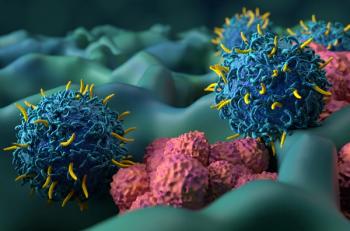
This review explores cytopenia after CAR T-cell therapy, including its risk stratification and management with growth factors, thrombopoietin-receptor agonists, and hematopoietic stem cell boosts.

Pharmacists will play an integral role in this evolving field, from patient education and monitoring AEs to new therapeutic developments and treatment protocols.

A variety of signs and symptoms of lymphoma were reported, including fever, stomach discomfort, and weight loss.

Dan Schrum discusses the integral role of pharmacy specialists in translating clinical trial results to clinical practice.

Isatuximab (Sarclisa; Sanofi) in combination with standard-of-care significantly improved progression-free survival in patients with newly diagnosed multiple myeloma.

Dan Schrum highlights the crucial role of lymphodepletion in enhancing the effectiveness of CAR T cell therapy.
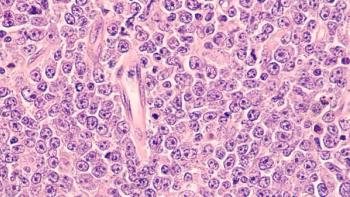
Denileukin diftitox-cxdl is the only therapy approved for cutaneous T-cell lymphoma that targets IL-2 receptors in malignant T-cells and Tregs.
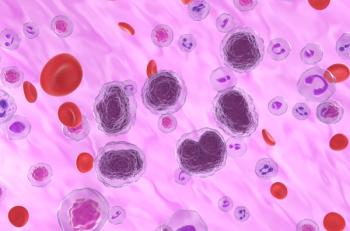
Replacing carmustine with cisplatin in BEAM ((carmustine, etoposide, cytarabine, and melphalan) conditioning could be more cost-effective for patients.

Acalabrutinib plus venetoclax, with or without obinutuzumab, demonstrated significant improvements in progression-free survival.
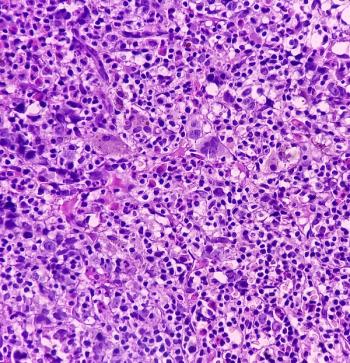
Investigators determine the efficacy and safety of the combination in a 2-phase trial.

This is the first and only on-demand, virus-inactivated, human plasma-derived concentration option that is indicated for this approval.
The drug previously received breakthrough therapy designation for newly diagnosed Philadelphia chromosome-positive chronic myeloid leukemia that is in chronic phase.
Early identification of monoclonal gammopathy of undetermined significance leads to more efficacious disease monitoring and intervention.

Increased levels of absolute lymphocyte count are associated with improved response to BCMA-targeted CAR T-cell therapy.

The findings show that those with higher plasma homocysteine concentrations experienced more sleep apnea events per hour compared with those with lower concentrations.
Researchers identify significant proteins involved in the growth and survival of malignant multiple myeloma cells.

Omar Nadeem, MD, discusses positive outcomes associated with GPRC5D-targeted CAR T-cell therapy.

Chimeric antigen receptor (CAR) T-cell therapy can engineer T cells to target malignant cells in multiple myeloma.

Increased immunoglobulin replacement therapy led to reduced infections and managed secondary immune deficiencies such as hypogammaglobulinemia.

Collaboration between community centers and academic medical centers can improve patient access to these complex therapies.
The approval marks the first and only T-cell engaging bispecific antibody administered subcutaneously to treat patients after 2 or more lines of systemic therapy.
Site-of-care considerations can pose challenges with these therapies.
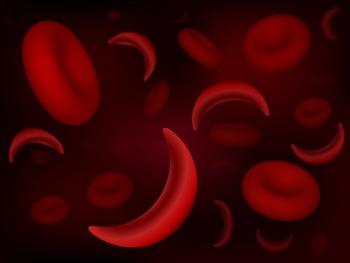
These findings build off research from March 2023 that demonstrated efficacy and safety of renizgamglogene autogedtemcel in patients with sickle cell disease.

Zahra Mahmoudjafari, PharmD, MBA, BCOP, FHOPA, discusses the impact of CAR T cell and bispecific therapies in treatment of patients with hematological malignancies.

Tim Mok, PharmD, BCOP, BCPS, discusses innovative therapies that are changing the treatment options available for patients with hematologic malignancies.
Advertisement
Advertisement
Trending on Pharmacy Times
1
TrumpRx Launches, Offering Cash-Paying Patients Discounted Drugs
2
Enlicitide Meaningfully Lowers LDL-C at 24 Weeks in Patients At Risk for ASCVD Events
3
SGLT2 Inhibitors in T2D Lower 5-Year Risk of CKD and Acute Kidney Injury
4
Pharmacist Takeover: CAR T Therapy Signals a Shift in ALL Treatment
5